
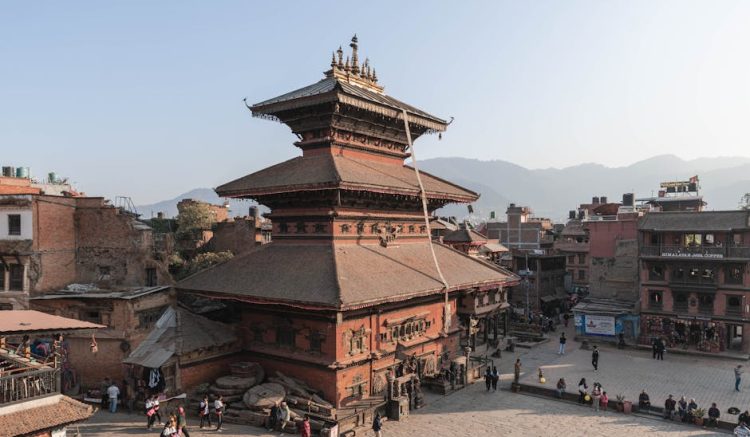
You’re going to land at Tribhuvan International Airport in Kathmandu and immediately want to turn around. It’s not the mountains. It’s not the people. It’s the fact that the arrival hall feels like a high-stakes game of Tetris played with human bodies and dilapidated luggage trolleys. I spent forty-five minutes once just trying to find a form for my visa because the guy behind the desk decided it was time for tea. Right then. No warning. Just tea.
Nepal is amazing, but it is also a total disaster. If you go there expecting a seamless ‘Eat Pray Love’ experience, you’re going to be miserable. You have to embrace the fact that nothing works on time, everything is covered in a fine layer of yellow dust, and you will, at some point, have a very intimate relationship with a squat toilet. I’ve been there three times now—totaling about five months on the ground—and I still get things wrong. But I’ve learned enough to know that most of the travel tips you read online are written by people who spent three days in a five-star hotel in Patan and never actually touched a public bus.
The airport is a hazing ritual
Let’s talk about the first two hours. When you get off that plane, don’t rush. You can’t beat the system. The visa machines are usually broken, or the line is three hundred people deep. Pro tip: Fill out the online visa form before you leave home and print the damn thing. Even then, you’ll wait. Then you’ll wait for your bags. I once watched a guy wait three hours for a backpack that was sitting in a corner behind a stack of tires the whole time. Nobody told him. He just had to wander around until he saw it.
Once you exit, you’ll be swarmed by taxi drivers. It’s overwhelming. They aren’t trying to hurt you; they’re just trying to make twenty bucks. Just pick one, agree on a price before you put your bag in the trunk (it should be about 700-900 NPR to Thamel, though they’ll ask for 1500), and accept that your driver will drive like he has a personal vendetta against every other vehicle on the road. It’s fine. You’ll survive. Probably.
The ‘Buy Gear in Kathmandu’ lie
Everyone tells you: ‘Oh, don’t bring your own gear, just buy it in Thamel! It’s so cheap!’
I used to believe this. I was completely wrong. Look, if you need a pair of wool socks or a cheap fleece for sitting around a campfire, fine. Buy it there. But if you are actually trekking? If you are going over a 5,000-meter pass? Do not buy a knockoff ‘The North Face’ jacket for $40. I did this in 2018. I bought a down jacket that looked great. By day four of the Annapurna Circuit, the feathers started leaking out of the seams so fast I looked like I’d been in a pillow fight with a poltergeist. By day six, the zipper snapped off in my hand. I was freezing, I was annoyed, and I ended up having to buy another jacket at a massive markup in Manang.
- Bring your own boots. Break them in at home. Do not buy boots in Nepal.
- Bring your own sleeping bag if you’re going high. The rental ones often smell like a wet dog that’s been dead since the 90s.
- Buy your water filter before you land. I tracked my usage and saved about $80 on plastic bottles over six weeks by using a Grayl filter.
Actually, let me rephrase that—you can buy real gear in Kathmandu at the official Sherpa or North Face stores, but the prices are the same as in London or New York. The ‘cheap’ stuff is garbage. It just is. I know people will disagree and say they did Everest Base Camp in $10 sneakers, but those people are either lying or lucky. Don’t be that person.
The ‘Tourist Bus’ is a myth
There is no such thing as a comfortable bus in Nepal. Whether you pay $10 for a local bus or $30 for a ‘luxury’ tourist bus to Pokhara, you are still on the same crumbling roads. The only difference is the tourist bus might have slightly more legroom and fewer goats on the roof. Actually, I take that back. The local buses are faster because the drivers are genuinely insane. The tourist buses are slower because they stop at ‘buffet’ restaurants where you’ll pay triple for mediocre Dal Bhat.
The road from Kathmandu to Pokhara is roughly 200 kilometers. In any normal country, that’s a three-hour drive. In Nepal, it’s a twelve-hour endurance test.
I once spent fourteen hours on a bus from Kathmandu to Besisahar. The seat in front of me was broken so it was permanently in my lap, and the guy next to me spent the entire trip playing TikTok videos at full volume without headphones. It was a special kind of hell. Anyway, my point is: don’t schedule anything important for the day you arrive at a new destination. You will be tired, dusty, and vibrating from the potholes.
I might be wrong about this, but Pokhara is overrated
I know, I know. ‘But the lake! But the views!’
Look, Pokhara is fine. It’s where you go to eat a burger and drink a beer after a trek. But as a destination itself? It’s a bit of a soul-sucking backpacker theme park. Every shop sells the same singing bowls, the same ‘I Love Nepal’ t-shirts, and the same overpriced lattes. It feels like it could be anywhere in Southeast Asia. If you want real Nepal, stay in Kathmandu for longer than a day. Go to Patan or Bhaktapur. Or better yet, get out of the cities entirely.
I refuse to recommend the ‘Lakeside’ area of Pokhara as a cultural experience. It’s a place to recover, not a place to explore. I’ve spent weeks there and I can’t tell you a single meaningful thing I learned about Nepalese culture while sitting in a ‘reggae’ bar overlooking the water. It’s a bubble. A comfortable, air-conditioned, slightly boring bubble.
The secret to not dying on a trek
It’s not the altitude. Well, it is the altitude, but it’s mostly the ego. I saw a guy in 2021 trying to smash out the trek to Gokyo Lakes in half the recommended time because he wanted to get back for a flight. He looked like a ghost. His lips were blue, he was stumbling, and he was still trying to push uphill.
The secret is being the slowest person on the trail. I’m serious. I aim to be the last person into the teahouse every single day. I stop to look at every bird, every donkey train, every weirdly shaped rock. My pack weight is exactly 7.2kg—I weighed it every morning on a luggage scale for a month to make sure I wasn’t over-packing—and I still felt it.
Also, Dal Bhat. Eat it. Twice a day. It’s the only thing that’s consistently fresh. The ‘pizza’ at 4,000 meters is just a piece of cardboard with some yak cheese that may or may not have been sitting in a sun-drenched window for three days. I had a yak burger in Manang once (bad idea) and spent the next 48 hours wishing for a quick death. Stick to the lentils. They are fuel.
One more thing: Don’t trust the Wi-Fi. They’ll charge you $5 for a ‘high-speed’ card that works for exactly ten minutes before the clouds roll in and kill the signal. Just buy a local Ncell SIM card at the airport and accept that you’ll be offline once you hit the high ridges. It’s better that way.
Nepal is the most beautiful place I’ve ever been, but it’s also the most frustrating. It’s loud, it’s smelly, and the bureaucracy is a nightmare. But then you’re standing at the top of a ridge at 5:00 AM, the air is so cold it hurts to breathe, and the sun hits the top of Machapuchare, and suddenly you don’t care about the broken bus or the fake jacket. You just feel small. And that’s really why we go, isn’t it?
I still don’t know if I’ll ever go back for a fourth time. My knees say no, but my heart… well, you know how it goes. Just bring your own boots. Seriously.