
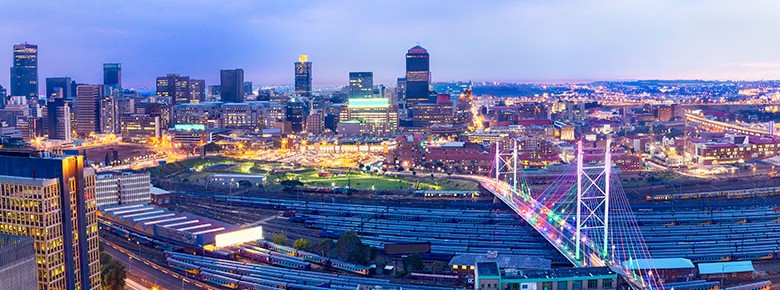
Three days in Joburg sounds like a consolation prize — a layover city before the real destinations. It isn’t. Johannesburg is one of the most complex, misunderstood cities in Africa, and 72 hours is enough to get a genuine read on it, as long as you spend it in the right places.
Why Most Joburg Itineraries Waste Your Time
The standard tourist circuit — stay in Sandton, do one half-day Soweto tour, eat at a hotel steakhouse — turns one of Africa’s most layered cities into a bland day trip. Johannesburg splits into neighborhoods that feel nothing like each other. If you spend all three days inside the Sandton bubble, you’ve paid for a flight to one of the continent’s most interesting cities and essentially visited a shopping mall.
The fix: base yourself between districts, use Uber for every trip, and treat the Apartheid Museum as the non-negotiable first stop.
Where to Base Yourself: Joburg Neighborhoods Side by Side
Location matters more in Joburg than almost any other city I’ve visited. Traffic can add 45 minutes to a 5km trip during rush hour, and certain neighborhoods transform after dark. Here’s the honest breakdown before you book.
| Neighborhood | Best For | Safety After Dark | Mid-Range Nightly Rate |
|---|---|---|---|
| Sandton | Business travelers, first-timers wanting security | High (very managed) | R1,800–R3,500 |
| Rosebank | Central for touring, genuine food scene | High | R1,400–R2,800 |
| Maboneng | Art scene, authentic inner-city feel | Medium — Uber only at night | R800–R1,500 (mostly Airbnb) |
| Melville | Restaurants, nightlife, 7th Street strip | Medium | R900–R1,600 |
| Parkhurst | Families, longer stays, suburban cafe culture | High | R1,200–R2,000 |
For 72 hours, Rosebank is the smartest base. It’s quiet enough to sleep well, central enough that Uber times stay reasonable in every direction, and the food scene on Jan Smuts Avenue is legitimate. The Protea Hotel Fire & Ice! Melrose runs around R1,500 per night and is reliable without feeling generic. If budget allows, Fairlawns Boutique Hotel in Morningside sits around R3,800 per night and is genuinely one of the better small luxury properties I’ve stayed in on the continent.
Don’t book the Sandton City hotel strip unless you’re there for a conference. It’s expensive, characterless, and places you in the worst spot for Uber times to the parts of the city that actually matter.
Day 1: The Apartheid Museum and Soweto — In That Order
These two belong on the same day. They’re 15 minutes apart by car, and the museum provides context that completely changes how Soweto lands. Do the museum first, every time.
Apartheid Museum — 9am to noon (R180 per adult)
Go when it opens. By 11am the tour buses arrive and the atmosphere shifts noticeably. Buy your ticket at the gate — no advance booking needed on weekdays — and plan for at least two and a half hours. Most visitors budget 90 minutes and leave having seen maybe 40% of it.
The entry mechanism assigns you a race-classified card at random and directs you through either the “whites only” or “non-whites only” gate. It sounds gimmicky in description. It doesn’t feel gimmicky when you’re standing in it. The section on the 1976 Soweto Uprising is dense and essential — read the panels, don’t just scan the photographs. This is not a place to rush, and it’s not a place to bring half your attention.
Put your phone away for the first hour. You’ll use it afterward.
Lunch in Soweto — 12:30pm (R120–R280)
Eyadini Lounge on Khumalo Street is the local’s choice. Loud, packed on weekends, and the pap and vleis will cost you about R120. If you want something calmer, Sakhumzi Restaurant on Vilakazi Street does a buffet lunch for R280 with live marimba music on weekends. Eyadini is more authentic; Sakhumzi is more accessible for first-timers who want to ease in. Both are good.
Vilakazi Street and the Mandela House — 2pm to 5pm
Walk Vilakazi Street after lunch. The Mandela House Museum is at No. 8115 — R80 entry, 45 minutes, worth every rand. It’s small and not particularly polished, which is exactly why it works. Desmond Tutu’s house is a short walk away. The street is walkable and safe during daylight with normal tourist foot traffic.
Skip Orlando Towers unless bungee jumping is specifically on your list. The view over Soweto tells you more from street level than it does from up there.
Dinner back in Rosebank: Marble Restaurant on Keyes Art Mile. Book ahead — it fills up most evenings. Wood-fired grills, a genuinely good wine list, and a crowd that skews local over tourist. Budget R500–R800 per person including drinks.
Day 2: Constitution Hill, Braamfontein, and Maboneng
This is the day you spend in Joburg’s actual urban core — where the city’s real energy lives. It requires some comfort with denser, grittier surroundings. Use Uber between each stop and don’t try to walk between districts.
Constitution Hill — 9am to 11am (R120 entry)
The site was once the Old Fort Prison, where both Gandhi and Mandela were held. The Constitutional Court now stands on the same ground, and the architecture deliberately uses bricks from the demolished prison. Tours depart at 10am and noon — the 10am slot is better. The guide on my last visit was exceptional; don’t skip the tour and just wander alone.
Braamfontein — 11:30am to 1:30pm
Joburg’s university district. Walk Juta Street. Father Coffee does some of the better espresso in the city — a flat white is R38. If your visit falls on a Saturday, Neighbourgoods Market runs 9am–3pm and is legitimately one of the best urban markets in southern Africa: street food, local designers, vinyl, and a food hall that gets creative. Don’t miss it if the timing works.
Lunch at Canteen inside the Wits Art Museum building. Simple food, R80–R120 for a full meal, and the room is full of university students rather than tourists. That alone is refreshing.
Maboneng Precinct — 2pm to 6pm
Uber down from Braamfontein — about 10 minutes. Maboneng is Joburg’s arts and creative district, built into reclaimed industrial buildings east of the CBD. Arts on Main and the Fox Street strip are the core. The rooftop bar at Arts on Main has a good view over the precinct and is a fine place to stop and figure out dinner.
Joburg Food Tours runs a walking food tour of Maboneng for R450 per person, roughly two and a half hours. Book at least 24 hours ahead. The context you get about the neighborhood’s history makes the walk significantly more interesting — it’s not just eating, it’s a proper introduction to how this part of the city changed.
Be back at your hotel or Ubering out of Maboneng by 7pm. The precinct has energy early evening, but it’s not a late-night-on-foot situation.
Day 3: Three Options — Pick the One That Fits Your Trip
Your last morning to full day. The right choice depends on what else is in your South Africa itinerary.
- Cradle of Humankind (R220 entry, 45-minute drive west) — A UNESCO World Heritage Site and one of the richest hominin fossil sites on earth. The Maropeng Visitor Centre explains the finds without dumbing them down. The Sterkfontein Caves tour — included in entry — goes underground to where Mrs. Ples, a 2.1-million-year-old Australopithecus skull, was discovered. Genuinely remarkable. Plan for half a day minimum.
- Lion & Safari Park (R395 per adult, 40 minutes north toward Hartbeespoort) — Semi-tame animals in a managed environment, popular with families. The lion interaction experience is R650 extra. If you’re continuing to Kruger National Park or any real game reserve on this trip, skip this entirely — it’ll feel tame by comparison and you’ll wish you spent the time elsewhere. If this is your only wildlife opportunity in South Africa, it’s a fine half-day.
- Pretoria (Tshwane) (50 minutes by Uber or Gautrain) — South Africa’s administrative capital and more underrated than it deserves to be. The Voortrekker Monument is architecturally striking and historically polarizing. The Union Buildings and their grounds are worth an hour. Pretoria has better street-level walkability than Joburg and a calmer pace. If your visit falls in late October or November, the jacaranda trees cover the entire city in purple — it’s genuinely one of the more spectacular seasonal sights I’ve seen in southern Africa.
My clear pick: the Cradle of Humankind. The Lion Park is forgettable if you have any other wildlife on the itinerary, and Pretoria fits better into a longer trip. The Cradle is a world-class site that most Joburg visitors skip entirely. That’s a genuine mistake.
The Real Safety Picture in Johannesburg
Is it as dangerous as everyone says?
The crime statistics are real. Joburg has a high robbery rate, and parts of the CBD are not safe to walk alone, especially after dark. That’s not fearmongering — it’s accurate. What’s overblown is the idea that the city is uniformly dangerous and impossible to navigate safely. The version of Joburg that most tourists experience — Rosebank, Sandton, Maboneng during daylight, Soweto with an Uber or hired car — is a managed experience where risk is substantially lower than the international reputation suggests.
I’ve done four trips to Joburg without incident. That’s not a guarantee of anything; it’s a data point about what responsible navigation looks like in practice.
What actually gets tourists into trouble?
Walking. Johannesburg is a driving city. Attempting to walk between areas that aren’t specifically designed as pedestrian zones raises risk quickly. Uber works seamlessly throughout the city and a cross-town trip rarely costs more than R120–R150. Use it for everything, including the 400-metre trip to a restaurant you can almost see from your hotel window.
The Gautrain is safe, air-conditioned, and connects OR Tambo Airport to Sandton in 15 minutes for R194. Take it from the airport instead of a metered cab and you immediately sidestep the most consistent tourist rip-off in the city. Don’t take minibus taxis unless you’ve been shown how the system works by a local.
Practical habits worth keeping
Keep your phone in your pocket unless seated somewhere enclosed. Don’t wear obviously expensive jewelry in crowded areas. Don’t leave camera gear visible on a car seat, even briefly. Be aware of who’s behind you at ATMs. These are basic urban habits that apply in plenty of major cities worldwide — Joburg just has a higher baseline requirement for them. Follow them consistently and the city opens up considerably.
Where to Eat and Drink in Johannesburg
Joburg’s food scene has improved dramatically over the past decade. These are the places worth planning around.
Gold Restaurant in Greenside charges R850 per person for an all-inclusive African dining experience — multiple courses of dishes from across the continent, drumming, and dancing. It sounds like a tourist production. It’s actually well-executed, the food is genuinely good, and the evening works as a deliberate cultural dinner rather than a default night out. Book at least two days ahead.
Pata Pata in Melville has been running since the 1990s. Live music, full meals for R150–R250, and a crowd that’s a mix of students, long-time locals, and people who’ve been coming for twenty years. It doesn’t photograph well and has no PR strategy. It’s very good.
For specialty coffee: Father Coffee in Braamfontein and Rosetta Roastery in Melville both roast on-site and take espresso seriously. Cape Town still leads on coffee culture in South Africa, but the gap has genuinely closed.
One practical note on cost: eating in Joburg is cheap by international standards. A full meal with drinks at a mid-range restaurant runs R250–R450 per person. At Gold you’re paying for an experience — everywhere else, R600 for two people with wine is a generous dinner. Your food budget for 72 hours is unlikely to stress you, which frees you to spend on the experiences that actually cost money.