
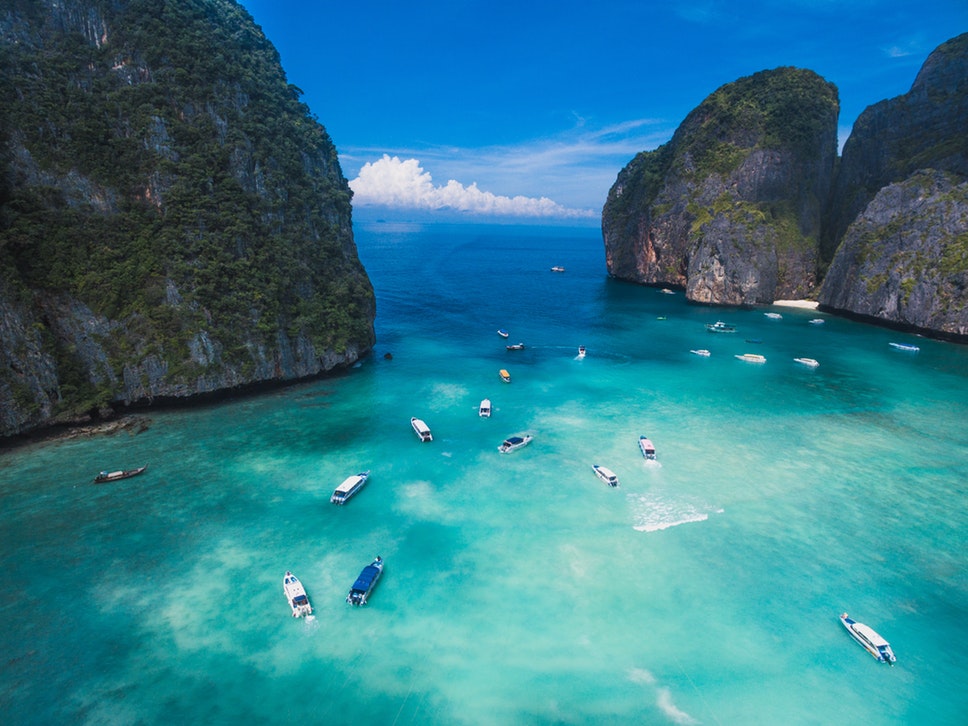
Are you planning a Thailand trip and wondering if Phuket and Koh Samui are really worth fighting through the crowds?
Here’s what years of traveler reports and ferry schedules consistently suggest: they’re not your only options — not even close. Thailand’s coastline stretches over 3,200 kilometers. Tourist infrastructure concentrates heavily around four or five well-marketed islands. What that leaves behind is an extensive stretch of provincial beaches, quiet archipelagos, and fishing village shorelines that most foreign visitors never locate.
Below, you’ll find eight of the least-visited beaches and islands in Thailand, a practical assessment of how to reach them, and clear guidance on which types of travelers are best suited to each destination.
Six Thai Beaches Compared: The Data Before the Decision
Most travel articles list beaches without giving you the comparative data needed to make a real choice. Here’s a structured breakdown covering crowd levels, accessibility, and traveler fit — the three factors that actually determine whether a remote beach is worth the detour.
| Beach / Island | Province | Crowd Level | Getting There | Best For | Typical Daily Cost (USD) |
|---|---|---|---|---|---|
| Koh Kood (Ko Kut) | Trat | Very Low | Ferry from Laem Sok Pier (~2.5 hrs) | Couples, slow travel | $50–90 |
| Koh Mak | Trat | Low | Ferry from Laem Ngop (~2 hrs) | Cyclists, families | $35–65 |
| Koh Kradan | Trang | Low–Moderate | Speedboat from Pak Meng (~45 min) | Snorkelers, divers | $60–100 |
| Koh Ngai (Hai) | Trang | Low | Speedboat from Pak Meng (~30 min) | Budget travelers, couples | $30–60 |
| Koh Sukorn | Trang | Very Low | Local ferry from Ban Hua Hin (~30 min) | Off-grid adventurers | $20–45 |
| Hat Khom, Koh Phangan | Surat Thani | Low | Songthaew from Thong Sala (~25 min) | Backpackers avoiding Full Moon crowds | $25–50 |
The Trang province cluster — Koh Kradan, Koh Ngai, Koh Sukorn — offers the most concentrated access to quiet beaches within a single regional trip. All three are reachable from Pak Meng or Kuantungku pier in under an hour, making an island-hopping circuit genuinely practical without a single domestic flight.
Koh Kood consistently tops legitimate “underrated Thailand” assessments. Despite being Thailand’s fourth-largest island, it has no airport, no 7-Eleven, and limited ATM infrastructure. That friction alone keeps mass-market tourism packages away — and keeps the beaches quiet.
How to Reach These Beaches Without Getting Stranded
The ferry and speedboat schedules servicing Thailand’s provincial islands are not published in real time on any major booking platform. That’s the primary structural reason these beaches stay uncrowded — the access information simply doesn’t circulate through mainstream travel channels.
Here’s a working method most travelers overlook:
- Go to the pier, not the booking website. Local ferries in Trat province and Trang province frequently don’t appear on 12go.asia or Lomprayah. Walk to Laem Ngop Pier or Pak Meng Pier and ask at the ticket window directly. Schedules shift between seasons without any online update.
- Book an extra night near the departure port. Ferries from Laem Ngop to Koh Mak typically run once daily in low season. Missing one means losing a full day. Staying overnight in Trat town or Trang city before crossing removes that risk entirely.
- Use longtail boats for short crossings. Koh Sukorn’s scheduled ferry runs infrequently, but longtail operators from Ban Hua Hin run informal crossings for 200–300 THB per person when enough passengers are present.
- Low season means fewer crowds and higher risk. Andaman beaches — Koh Kradan, Koh Ngai — close most guesthouses from June through September. Confirm directly with accommodation before planning a monsoon-season visit to any Trang island.
- Withdraw cash before departure. Koh Kood, Koh Sukorn, and Koh Mak all have limited ATM coverage. The single ATM on Koh Mak runs out of cash regularly. Withdraw in Trat or Trang before boarding any ferry.
One detail that prevents a common and costly mistake: the correct departure pier for Koh Kood ferries is Laem Sok Pier, located 30 kilometers south of Trat city — not Laem Ngop, which handles the Koh Chang and Koh Mak routes. This distinction is frequently mislabeled in travel blogs, and mixing up the two piers can mean a two-hour detour on arrival day.
The Trang Railway Station has a tourist assistance desk that posts updated ferry schedules for local islands. It’s generally more current than anything available through online booking channels.
Koh Kood Makes the Strongest Case — Here’s the Evidence
Koh Kood is the best undiscovered island in Thailand. That’s not a subjective opinion — it’s a conclusion supported by the specific combination of factors present there that are absent from comparable alternatives.
Water Clarity Most Gulf Islands Can’t Match
Koh Kood’s northeastern beaches — Hat Khlong Chao and Hat Ao Phrao — show underwater visibility of 10–15 meters on calm days. That figure is comparable to Andaman destinations like Koh Lipe or Koh Rok, which is unusual for the Gulf of Thailand. The Khlong Chao freshwater river empties near the main beach, which changes the sand composition at the river mouth: finer, whiter, and less compacted than a typical gulf beach. It’s a genuinely different texture underfoot.
What the Accommodation Market Actually Looks Like
No international chains operate on Koh Kood. The practical choices split into three tiers: budget guesthouses near Ao Tapao Bay (roughly $25–40 per night), mid-range beachfront options like Shantaa Resort (~$80–120 per night), and the ultra-luxury Soneva Kiri ($1,000-plus per night, accessed by private seaplane or speedboat). There’s almost no mid-to-upper-mid option — the gap between Shantaa and Soneva is significant. For most travelers, Shantaa or the Ao Tapao guesthouses represent the practical baseline and deliver genuine beach quality without the resort premium.
The Trade-Off to Know Before Going
Koh Kood has no nightlife. A weekend night market runs near Ban Khlong Hin Dam, but it’s small. Internet connectivity is available but unreliable by mainland standards. Roads in the island interior remain unpaved in sections. If you’re expecting Koh Samui-level infrastructure with fewer tourists present, you’ll find something categorically different. This island is suited to travelers who genuinely want quiet — not travelers who want the concept of quiet while retaining access to amenities.
The Timing Trap That Closes Beaches Before You Arrive
Thailand has two coasts. They operate on different monsoon cycles, and most generic travel guides treat the country as a single weather system.
The Andaman coast — covering Koh Kradan, Koh Ngai, Koh Lipe — peaks from May through October with southwest monsoon conditions. The Gulf coast — covering Koh Kood, Koh Mak, Hat Khom on Koh Phangan — takes its worst weather from October through December via northeast monsoon. Booking a Trang island trip in July based on a generic “best months for Thailand” article is how travelers arrive at closed guesthouses with nowhere to stay.
Andaman best window: November through April. Gulf best window: February through April, then again July through September. Those windows don’t fully overlap, which is why a single Thailand beach trip generally can’t cover both coasts in optimal conditions.
The practical verdict: visiting between June and September, target Koh Kood or Koh Mak on the Gulf side. Traveling November through March, the Trang islands — Koh Kradan and Koh Ngai — are worth the additional logistics. Getting this backwards is the single most common mistake on Thailand hidden-beach itineraries.
Koh Sukorn: The Island That Barely Appears in Search Results
Koh Sukorn gets almost no coverage in English-language travel media. Not because it lacks merit — because the access logistics are unusual enough to discourage casual visitors, and the island generates almost no tourism review content as a result.
It’s primarily a rubber plantation island in Trang province. The western beach — Hat Talo Yai — runs approximately three kilometers, faces open water, and is nearly always empty. No dive shops operate here. No tour boats service it. The snorkeling is modest compared to the offshore Trang archipelago. What Koh Sukorn offers instead is a functioning Thai village community alongside a genuinely uncrowded beach — an increasingly rare combination anywhere in Southeast Asia.
The main accommodation is Sukorn Beach Bungalows, operated by a Thai-Swedish family. Rates run 700–1,200 THB per night ($20–35). Three or four other small guesthouses exist, but Sukorn Beach Bungalows has the most established reputation and direct booking infrastructure. Food options are limited to a handful of local restaurants within cycling distance.
This destination is not appropriate for travelers expecting resort-level services on their first Thai beach trip. It’s specifically suited to people who have already done the well-known islands and are looking for something with fewer managed experiences and more genuine local character. All of the friction — the infrequent ferry, the limited Wi-Fi, the absence of beach bars — is the point, not a problem to be solved.
Questions Travelers Ask Before Booking Remote Thai Beaches
Has Koh Lipe already been overrun?
Yes — by most honest assessments, Koh Lipe crossed from hidden gem to developed destination around 2015–2018. It now has over 80 registered accommodation options, a Walking Street market, and regular speedboat connections from multiple mainland ports. Travel articles continue labeling it undiscovered because that framing attracts clicks. The on-the-ground reality is a busy, commercialized island. Koh Lipe is worth visiting for its exceptional Andaman water clarity and proximity to Tarutao Marine National Park — just not on the premise that you’ll find solitude.
Are remote ferry crossings safe for independent travelers?
Generally yes, with preparation. Small boat crossings in rough weather carry real risk. The October–December period on the Gulf side and May–October on the Andaman side can produce sea conditions that make crossings uncomfortable or genuinely dangerous. Most local ferry operators cancel service independently when conditions are unsafe — but refunds aren’t always automatic for pre-booked tickets. Check directly with pier operators on the morning of any planned crossing during monsoon-adjacent months. This article is not a substitute for real-time local safety information — verify current conditions directly with operators before any boat crossing.
Is it realistic to combine Koh Kood with a Bangkok itinerary in ten days?
Yes, but the routing requires specific planning. The most efficient path: fly Bangkok to Trat via Bangkok Airways (~1 hour, around $60–90 each way), taxi to Laem Sok Pier (30 minutes), then ferry to Koh Kood (2.5 hours). Total travel time from Suvarnabhumi Airport to the island runs approximately five to six hours door-to-door. Allocate three nights minimum on Koh Kood — anything shorter doesn’t justify the transit. Return via the same route, or combine with a Koh Mak stop on the way back for a two-island circuit without retracing the full route.
For a first hidden-beach trip in Thailand, the clearest itinerary that consistently delivers: two nights in Trat town to handle logistics and acclimatize, followed by four nights on Koh Kood. That structure gives you an honest experience of provincial Thailand alongside the beach — and it fits inside a ten-day trip without any aggressive travel days.