
May is one of the better months for combining São Miguel’s crater-lake trails with its volcanic hot springs. The island is green, daylight lasts roughly 14 hours, and summer crowds have not reached their peak, but cloud and sudden rain still shape each day’s plan.
The guidance below concerns travel planning, trail safety, weather judgment, and local access rules.
Is May a good month for São Miguel hiking?
Yes: May is the best shoulder-season choice for hikers who can accept changing weather. São Miguel usually feels mild at low elevation, with daytime temperatures often around 17–20°C. The main benefit is not heat. It is flexibility. You can walk for several hours without the heavy summer sun, then reach a thermal pool before dinner.
The weather advantage
Vegetation is usually at its strongest in May. Hydrangeas begin to appear along roads and farm boundaries, streams still carry water, and the volcanic slopes look more vivid than they do after a dry summer. Early starts also help. The first tour groups tend to arrive later in the morning, especially at Sete Cidades and Lagoa do Fogo.
The trade-off: cloud and rain
May does not guarantee clear viewpoints. Rain can also arrive from the Atlantic with little warning, and wind feels much colder on exposed ridges. The practical verdict is simple: book May for the landscapes and lower pressure, but keep two flexible days for your highest viewpoints. Put a low-level walk, a village visit, or Furnas on the schedule when the ridges disappear into cloud.
How wet and cool is São Miguel in May?
Plan around microclimates rather than a single island forecast. Ponta Delgada, the south coast, and Furnas can have different conditions from the same morning. The table gives useful planning ranges, not guarantees. Check the local forecast and trail notices before leaving your accommodation.
| Area or situation | Typical May pattern | Effect on a hike |
|---|---|---|
| Ponta Delgada and south coast | 17–20°C by day; lighter wind | Good base for an early start and an evening walk |
| Sete Cidades viewpoints | 14–18°C; frequent cloud on ridges | Carry a waterproof layer even when town is sunny |
| Lagoa do Fogo slopes | 12–17°C; stronger wind and mist | Allow extra time and avoid exposed edges in poor visibility |
| Furnas valley | 16–20°C; damp air and volcanic steam | Comfortable for walking, but paths may be muddy |
| Atlantic coast | About 17–19°C; sea conditions vary | Do not treat coastal swimming as a fixed part of the plan |
What the numbers do not show
Wind changes the feel of the island more than the thermometer suggests. A 16°C ridge with mist can feel raw, while a sheltered 18°C path near Furnas may feel warm. Pack for both conditions in one day.
How much daylight is available?
In mid-May, São Miguel has roughly 14 hours of daylight. That gives enough time for one major hike and one short stop, but it does not remove the need for a turnaround time. Leave the viewpoint circuit before dusk, because wet stone and poor visibility make familiar paths harder to follow.
Which crater-lake hikes deserve priority?
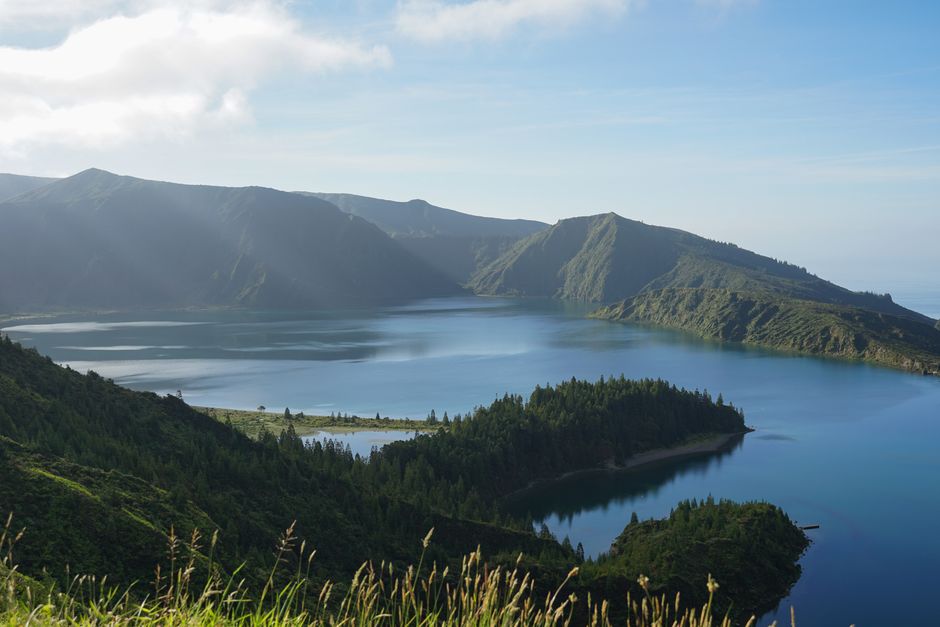
The strongest May plan gives each major landscape a different job. Sete Cidades offers the classic volcanic panorama and the easiest way to see several lakes in one area. Lagoa do Fogo gives the most dramatic high-elevation scenery, but it is the route most affected by cloud and wind. Furnas adds a lower, greener walk beside a living geothermal basin. My priority order is Sete Cidades first, Furnas second, and Lagoa do Fogo when the forecast gives you a clear window.
Sete Cidades for the first clear day
It is a strong opening hike because the viewpoints are easy to combine with the village and lake shore. Add Lagoa do Canário and the nearby viewpoints only if the ridge is clear. The mistake is spending the entire day chasing every lookout while ignoring the cloud moving in from the ocean. Start high, then descend.
Lagoa do Fogo for the best weather window
Lagoa do Fogo is the better choice when visibility is stable. The landscape feels more remote, and the descent toward the lake can be steep, slippery, and tiring on the return. Use the official PRC02 SMI route information before setting out because access, parking, and route conditions can change. A clear morning with moderate wind is worth more than a scheduled visit in heavy mist.
Furnas for a reliable bad-weather day
The Lagoa das Furnas circuit is often described as roughly 9–10 km and about three hours, depending on the exact starting point and detours. It keeps you lower than the main viewpoints and offers water, forest, fumaroles, and a settlement with places to eat. Its clear advantage is resilience. When high viewpoints fail, Furnas still gives you a complete volcanic landscape rather than a consolation stop.
How do you hike São Miguel safely in May?
Use a conservative route rule: if cloud removes the next landmark, turn around or move to a lower trail. São Miguel’s paths are not difficult because of distance alone. Mud, steep grass, volcanic stone, wind, and poor visibility create the real risk.
- Check the route status. Use the official Azores trail information before leaving. A route that was open last week may have a temporary closure after rain or maintenance.
- Set a turnaround time. For an exposed ridge, turn back when visibility drops enough that you cannot identify the next marker. Do not wait for conditions to improve.
- Wear footwear with grip. The Salomon X Ultra 4 GTX is a real example of a waterproof hiking shoe with a lugged outsole; the point is traction, not the brand itself.
- Carry a rain layer. A Decathlon Forclaz MT100 waterproof jacket is a compact example of the type of shell that belongs in a day pack. A cotton sweatshirt is not a substitute.
The mistakes that cause most trouble
Starting a high trail in trainers, trusting a sunny town forecast, and leaving without water are common errors. So is treating a thermal bath as recovery after a hike that already caused blisters or exhaustion. Rest first; soak later.
Which hot springs pair best with a hiking day?
São Miguel’s thermal sites are not interchangeable. Each has a different setting, water temperature, crowd pattern, and tolerance for weather. The best pairing is Furnas after a Furnas walk, Caldeira Velha after a central-island route, and Ponta da Ferraria only when the tide makes the natural pool usable.
Should you choose Furnas or Caldeira Velha?
Furnas gives you several choices in one small area, including Terra Nostra’s large iron-rich pool and Poça da Dona Beija’s landscaped thermal pools. Water temperatures are commonly described in the high 30s Celsius, but the heat can feel intense after a long hike. Caldeira Velha feels more like a forest bathing site, with warm pools surrounded by dense vegetation. For a first visit, choose Caldeira Velha for atmosphere and Terra Nostra for the larger, more classic thermal experience.
When does Ponta da Ferraria make sense?
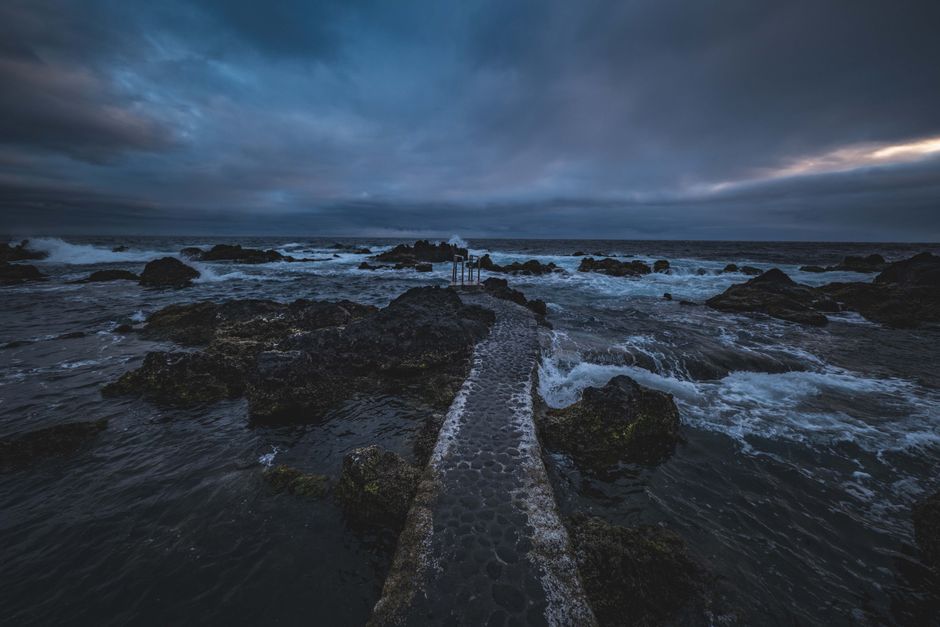
Ponta da Ferraria is a natural ocean pool warmed by geothermal water. Its temperature changes with the tide, so a visit planned without checking tide times can produce cold water, rough conditions, or an unsafe entry. Treat it as a bonus, not the fixed centrepiece of a day. If the sea is rough, use an inland pool instead.
What should you bring to a thermal site?
Bring a swimsuit, towel, sandals with secure soles, and a dark swimsuit that can handle mineral-rich water. Do not wear valuable jewelry. Rinse after soaking, drink water, and allow time to cool down before driving or starting another hike.
What should a seven-day May itinerary look like?
Base yourself near Ponta Delgada and protect the clearest days for Sete Cidades and Lagoa do Fogo. That arrangement cuts down on long transfers and makes it easier to swap a high trail for Furnas when cloud arrives.
Why the buffer day matters
São Miguel’s weather can cancel a viewpoint without ruining the holiday. A buffer day prevents one cloudy morning from forcing every later activity into a rushed schedule. It also gives your legs time to recover after the longer routes.