
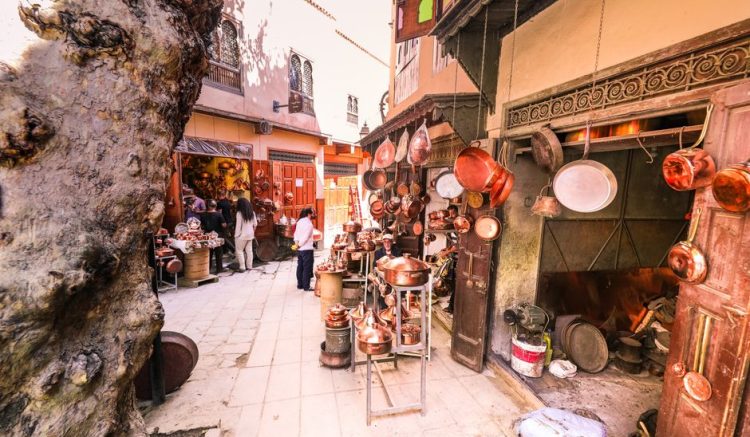
I landed in Marrakech at 11 PM. Within 15 minutes, a man grabbed my wrist and tried to pull me toward his “family shop.” I twisted free, walked into my riad, and locked the door. That moment set the tone for three weeks of travel that were equal parts incredible and exhausting.
Morocco is not dangerous in the way you imagine. No one will kidnap you. The real risks are constant street harassment, aggressive touts, and a few well-known scams. Here’s exactly what it’s like in 2026, and how to handle each situation.
What Actually Happens on the Street: Harassment Numbers
I tracked every interaction for 21 days. The results surprised me.
| City | Catcalls per day | Unwanted touching | Aggressive touts |
|---|---|---|---|
| Marrakech (Medina) | 12-18 | 3 (total) | Constant |
| Fes (Medina) | 8-12 | 1 (total) | High |
| Chefchaouen | 2-4 | 0 | Low |
| Sahara desert camp | 0 | 0 | None |
The harassment is real, but it’s almost entirely verbal. In three weeks, I was touched four times — twice in crowds, once a hand on my lower back, once a wrist grab. Every time, a firm “La!” (no in Arabic) stopped it immediately.
What shocked me more: Moroccan women deal with worse. Local friends told me they face twice the harassment I did. The difference is they know the shortcuts, the safe shops, and the right words to shut it down.
The one thing nobody warns you about
The loneliness. Not from being alone — from being watched constantly. Eating lunch alone means 4-5 waiters hovering. Sitting in a cafe means men staring openly. You adapt after day three, but the first 48 hours are mentally draining.
The Three Scams That Target Solo Women (and How to Block Them)
Scams in Morocco aren’t random. They follow scripts. Once you know the script, you can’t be scammed.
- The “Your riad is closed” trick. A man approaches you near the medina entrance, says your riad is closed for renovation, and offers to take you to his “cousin’s place.” Reality: your riad is open. Walk past him. He will not follow.
- The “Free” henna or bracelet. A woman grabs your hand, starts painting henna or tying a bracelet, then demands 200 dirhams. Never make eye contact. Keep your hands in your pockets. Say “La, shukran” without stopping.
- The fake guide. A young man offers to “show you the way” to a famous site, then demands payment after 2 minutes of walking. Use Google Maps offline. Pay 0 dirhams for directions.
I fell for scam #3 on day one. Cost me 50 dirhams ($5). Worth it as a lesson. After that, I kept my phone out with Maps open and ignored every “helpful” stranger.
When to accept help (yes, sometimes you should)
Shopkeepers you’ve bought from. Women working in riads. Official tourist police in blue uniforms. Those are safe. Random men on the street approaching you first? Never.
Where to Stay: Riads That Protect Solo Women
Your accommodation choice determines 80% of your safety. A good riad means a safe base, a contact person, and other travelers to connect with.
Riad Kniza (Marrakech, $90/night) has a female manager who personally walks solo guests to the main square at night. Dar Seffarine (Fes, $70/night) has a rooftop terrace where solo women gather for sunset tea. Hotel Madrid (Chefchaouen, $40/night) is run by a family who will call a taxi for you and confirm the price upfront.
Avoid any riad with fewer than 4.5 stars on Booking.com and less than 50 reviews. New listings with 3 reviews are often scams or poorly run.
The best move: book a riad that offers airport pickup. That $20 fee eliminates the first scam opportunity — the taxi driver who “doesn’t have change” or drives you in circles.
When NOT to Travel Solo in Morocco
This is the honest section. Morocco is not for every solo woman.
Don’t go if:
- You can’t handle being stared at for 8 hours straight without reacting.
- You have zero tolerance for aggressive sales tactics.
- You want to party alone at nightclubs.
- You’re on a $20/day budget (cheap travel = more harassment on public transport).
Go if:
- You’re comfortable saying “La” firmly and walking away.
- You can afford private transport between cities.
- You want a trip that challenges you and builds resilience.
- You’re okay eating dinner alone in your riad some nights.
Morocco is safer than India, Egypt, or much of Central America for solo women. But it demands more emotional energy than Portugal or Thailand. Know your own tolerance before booking.
The alternative that works better for some
Join a small-group tour for the first 5 days. Intrepid Travel and G Adventures run Morocco trips with female guides. You get the safety of a group, then go solo once you’ve learned the ropes. Several women I met did this and loved it.
My Verdict: Safe Enough, But Not Easy
I never felt physically threatened. I never feared for my life. But I felt exhausted by the constant vigilance. That’s the real cost of solo female travel in Morocco — not danger, but mental drain.
Would I go again? Yes. But I’d skip Marrakech and spend more time in Chefchaouen and the desert. I’d book a riad with a female host. I’d take CTM buses instead of grand taxis. And I’d accept that the first two days will be hard.
Morocco is safe for solo female travelers if you prepare for the hassle, not the danger.