
I spent 31 days eating my way from Hanoi to Ho Chi Minh City. I ate pho exactly four times. Not because it was bad — it wasn’t — but because every bowl of pho I skipped meant I could try something I’d never heard of. That trade-off was the best decision I made on the trip.
If you’re planning a food trip to Vietnam, here’s what actually deserves your stomach space.
Bun Cha in Hanoi: The Dish That Made Me Stop Ordering Pho
Hanoi’s real breakfast obsession isn’t pho. It’s bun cha — grilled pork patties and sliced pork belly swimming in a room-temperature fish sauce broth, served with cold rice noodles and a mountain of herbs. You don’t stir it. You don’t heat it. You dip the noodles into the bowl and eat it like a salad that happens to contain charred pork fat.
The version at Bun Cha Huong Lien (the place Anthony Bourdain ate with Obama) costs 90,000 VND ($3.60) for the full set. It’s good. But the better bowl is at Bun Cha Dac Kim on Hang Manh Street — 45,000 VND ($1.80) gets you a massive platter of pork, a bowl of broth with pickled green papaya, and enough herbs to hide a small dog under.
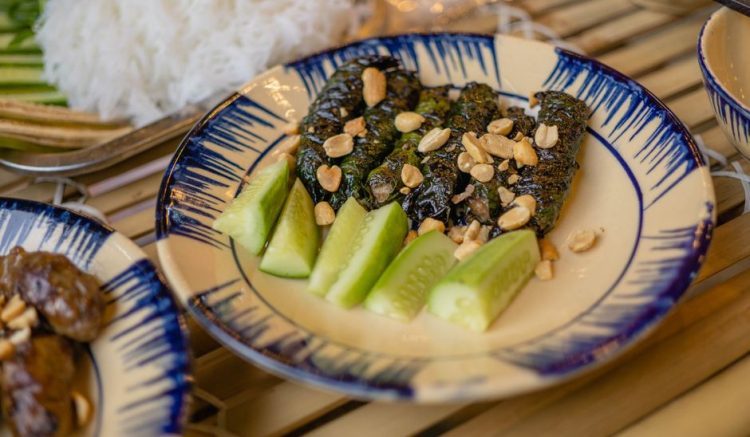
What nobody tells you: the pork patties are often wrapped in betel leaf before grilling, which gives them a slightly peppery, almost tea-like bitterness. That bitterness against the sweet-sour broth is the whole point. If your bun cha just tastes sweet and salty, you got a lazy version.
How to Order It Without Looking Lost
Walk in, hold up one finger, say “bun cha.” That’s it. The default order comes with both patties and belly slices. Add a side of nem cua be (crab spring rolls) for 35,000 VND if they have them. Dip everything. Drink the broth at the end — locals do, and you should too.
When Bun Cha Beats Pho
Pho is a morning dish. Bun cha works from 10 AM to 2 PM, which is when most travelers actually wake up and start looking for food. It’s also more filling per dong. A 45,000 VND bun cha set kept me walking until dinner. A comparable pho bo at Pho Thin (70,000 VND) had me hungry by 2 PM.
Banh Mi: The $1 Sandwich That Ruined All Other Sandwiches
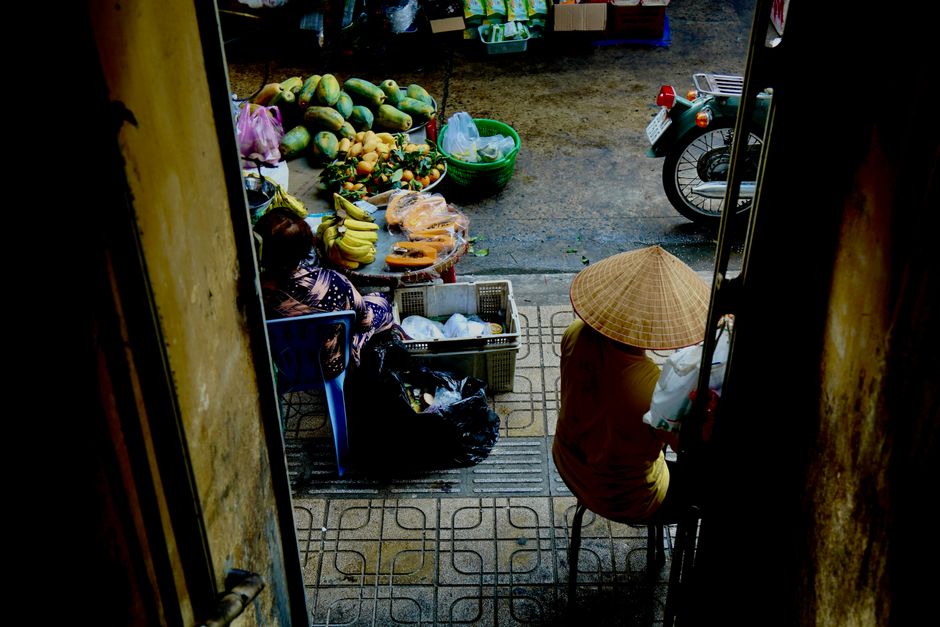
I ate 23 banh mi in 31 days. I kept a list. The best one cost 15,000 VND ($0.60) from a woman with a glass cart in Hoi An who didn’t have a name on her stall. The worst one was still better than any sandwich I’ve had in the US under $12.
The fundamental difference between a Vietnamese banh mi and every other sandwich: the bread. It’s a hybrid — wheat flour plus rice flour — which makes a crust that shatters like glass but an interior that’s almost cottony. That contrast is impossible to replicate with a French baguette. The sandwich exists because French colonialism left bread behind, but Vietnamese bakers fixed it.
| City | Stall/Shop | Price (VND) | What Makes It Different |
|---|---|---|---|
| Hoi An | Banh Mi Phuong | 25,000 | 5 types of pork, secret chili sauce, tourist-famous but still worth it |
| Hoi An | Unnamed cart near Central Market | 15,000 | Only pate, pickled carrots, cucumber, chili, and one type of pork. Perfect simplicity. |
| Hanoi | Banh Mi 25 | 35,000 | Good but overpriced. The pate is excellent; the bread is average. |
| Saigon | Banh Mi Huynh Hoa | 68,000 | Massive, loaded with cold cuts and butter. A meal by itself. Cash only. |
My actual recommendation: skip the famous places. Every neighborhood has a banh mi cart that’s been there for 20 years. Look for a long line of locals on motorbikes at 7 AM. Order whatever the person in front of you ordered. You’ll pay under 25,000 VND and it will be better than the tourist spots.
The Mistake Most People Make
They ask for no chili, no pate, no cilantro. Then they get a dry sandwich with cold cuts and wonder why people rave about banh mi. The pate is the moisture. The chili is the point. The cilantro is not optional — it’s what cuts through the fat. If you have the cilantro-tastes-like-soap gene, ask for extra pickled carrots instead. But don’t strip the sandwich down to bread and meat and expect magic.
Cao Lau: The Noodle Dish You Can’t Get Anywhere Else
This is the hill I’ll die on. Cao lau is the best noodle dish in Vietnam, and you can only eat it in Hoi An. The noodles are made with water from a specific well (the Ba Le well) and lye made from wood ash. They’re thick, chewy, and slightly alkaline — almost like Japanese ramen noodles but denser.
The dish itself: sliced roast pork, crispy pork cracklings, bean sprouts, herbs, and those fat noodles, all tossed in a tiny amount of dark, almost smoky broth. It’s not a soup. It’s barely a salad. It’s its own thing.
At Thanh Cao Lau on Thai Phien Street, a bowl costs 35,000 VND ($1.40). The owner makes the noodles fresh every morning and runs out by 10 AM. Go early. The pork is roasted over charcoal, and the cracklings are fried in the same fat, so the whole bowl tastes like one continuous piece of pork.
The failure mode: most restaurants in Hoi An’s old town serve a tourist version with thin rice noodles and shredded pork. It’s not cao lau. If the noodles look thin and white, you’re eating a fake. The real ones are thick, square-ish, and have a slight yellow-gray tint.
Mi Quang: The Turmeric Noodle Soup That’s Not Really a Soup
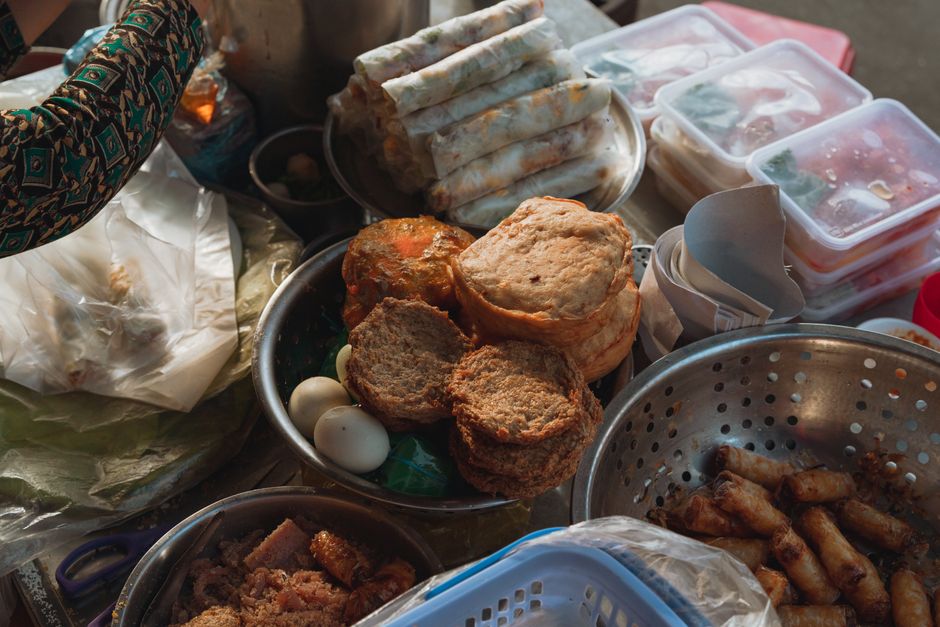
Central Vietnam’s other great noodle dish. Mi quang comes from Quang Nam province, and Hoi An and Da Nang both claim to do it best. The broth is minimal — just enough to coat the bottom of the bowl, maybe 3-4 tablespoons. The noodles are wide, flat rice noodles tinted yellow with turmeric. On top: shrimp, pork, quail eggs, peanuts, sesame rice crackers, and a tangle of herbs.
You mix it all together, and the tiny amount of broth becomes a dressing rather than a soup base. It’s brilliant. The peanuts and rice crackers give it crunch. The turmeric noodles give it earthiness. The herbs keep it fresh. There’s nothing else like it in Southeast Asia.
Best bowl I found: Mi Quang Ba Mua in Da Nang, 40,000 VND ($1.60). The shrimp are whole, head-on, and the broth is made with pork bones and shrimp shells. It’s intensely savory in a way that pho broth, with all its star anise and cinnamon, never gets to be.
Mi Quang vs. Pho: A Direct Comparison
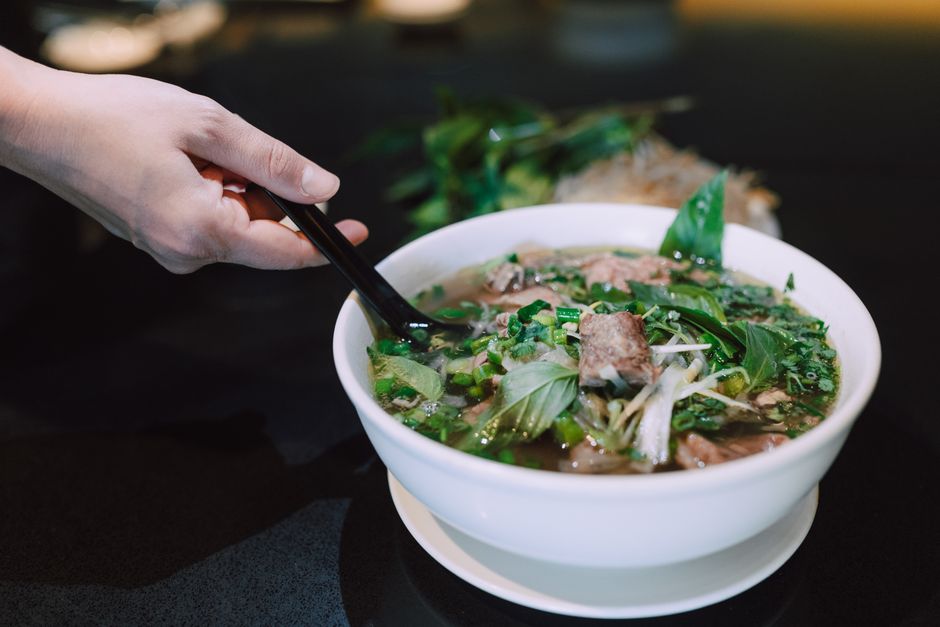
Pho is about clarity. Clear broth, clean flavors, everything in its place. Mi quang is about density. Less liquid, more stuff, every bite slightly different. If you’re a broth person, pho wins. If you’re a texture person, mi quang wins. I’m a texture person. A bowl of mi quang changes with every chopstickful — crunchy peanut, soft noodle, chewy shrimp, crisp cracker. Pho, for all its virtues, is the same bite from start to finish.
What I’d Skip Next Time (And What I’d Eat Twice)
Here’s the honest part. Not everything I ate was worth it. Some things were actively skippable.
- Skip: Banh xeo in tourist zones. The sizzling turmeric crepe is great when it’s made fresh in a home kitchen. At most tourist restaurants, it sits under a heat lamp and turns into a greasy, floppy mess. If you want banh xeo, go to Banh Xeo Ba Duong in Da Nang and pay 50,000 VND for the real thing.
- Eat twice: Com tam in Saigon. Broken rice with grilled pork chop, shredded pork skin, and a fried egg. At Com Tam Ba Ghien, it’s 85,000 VND ($3.40) and the pork chop is marinated in fish sauce and sugar until it caramelizes on the grill. I went back three times.
- Skip: Egg coffee at the famous places. Giang Cafe invented it, but now it’s a 45-minute wait for a cup of hot egg foam. Go to Cafe Dinh instead. Same recipe, no line, 35,000 VND.
- Eat twice: Bun bo Hue in Hue. The spicy beef and pork knuckle soup from central Vietnam. It’s pho’s angrier sibling. At Bun Bo Hue O Phung, a bowl costs 50,000 VND and will make you sweat. The lemongrass-chili oil floating on top is not optional.
If I had 48 hours in Vietnam and could only eat five things, here’s the list: bun cha at Bun Cha Dac Kim in Hanoi, cao lau at Thanh Cao Lau in Hoi An, mi quang at Mi Quang Ba Mua in Da Nang, com tam at Com Tam Ba Ghien in Saigon, and one random banh mi from whatever cart has the longest line. Pho wouldn’t make the cut. It’s good. It’s just not the best thing on the menu.