

The architectural landscape of the McGill University campus is a study in contrasts, but nowhere is this more evident than at the corner of Sherbrooke and McTavish. For those visiting the Desautels Faculty of Management, whether as a prospective graduate student, a visiting researcher, or a professional attending an executive seminar, the logistics of space acquisition can be surprisingly complex. The faculty operates out of two primary interconnected hubs: the classic Samuel Bronfman Building and the sleek, modern Donald E. Armstrong Building. Understanding the nuances of room booking within these walls requires more than just a login; it requires an appreciation for the hierarchy of space, the technical limitations of the booking software, and the localized etiquette that governs Montreal’s premier business education environment.
The Architecture of Access: Bronfman vs. Armstrong
To understand the room booking ecosystem at Desautels, one must first differentiate between the two physical structures that house the faculty. The Bronfman Building, located at 1001 Sherbrooke Street West, has served as the faculty’s home since the early 1970s. Its design is functional, characterized by the Brutalist-lite aesthetic common in North American academic institutions of that era. Rooms here tend to be traditional: fixed seating, standard whiteboards, and a focus on high-density occupancy. For the traveler or student, Bronfman represents the “old guard” of study spaces—reliable, numerous, but occasionally lacking in the ergonomic refinements found in newer builds.
Contrast this with the Donald E. Armstrong Building. Opened in 2018 following a massive fundraising effort, this space was specifically designed for the MBA and Masters programs. The rooms here are not just places to sit; they are “active learning” environments. Large glass walls, integrated digital displays, and modular furniture define the experience. However, this aesthetic comes with a higher degree of gatekeeping. Booking a room in Armstrong is generally restricted to graduate students, creating a stratified system that can catch visitors off guard. If you are an undergraduate (BCom) student or a visitor without specific graduate-level credentials, the Armstrong “fishbowls”—as the glass-walled breakout rooms are colloquially known—may remain tantalizingly out of reach.
| Feature | Bronfman Building | Armstrong Building |
|---|---|---|
| Primary User Base | BCom, Faculty, General Staff | MBA, PMBA, MMF, MMA |
| Room Aesthetic | Traditional, Enclosed, Functional | Modern, Glass-walled, Tech-heavy |
| Average Room Capacity | 4 to 12 people | 4 to 8 people |
| Tech Standard | VGA/HDMI, Whiteboards | Wireless Casting, 4K Displays, USB-C |
Navigating the EMS Booking Interface
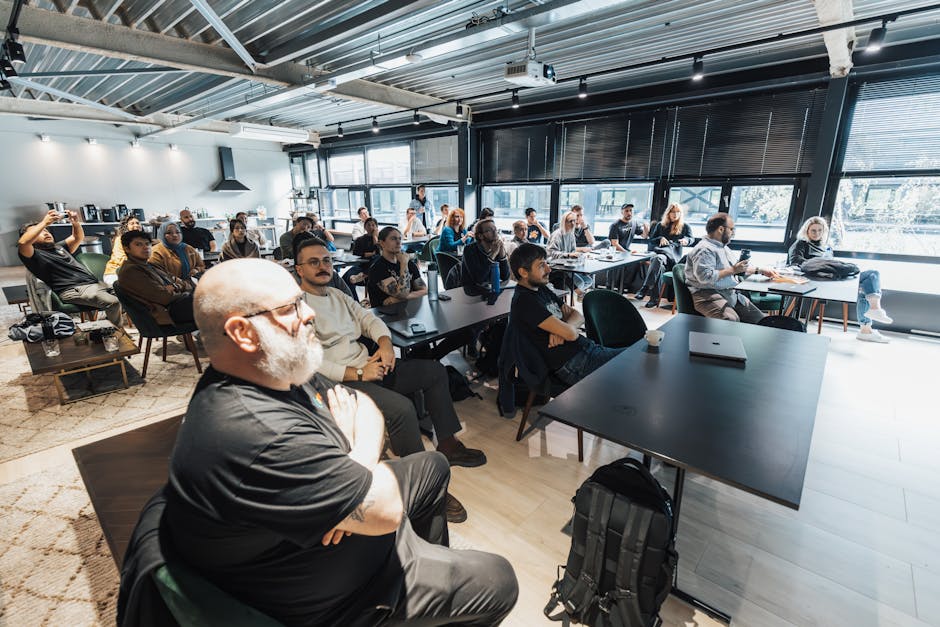
The technical backbone of the Desautels room booking process is the Enterprise Management System (EMS). This is not a bespoke system built by McGill, but rather a widely used institutional software that manages thousands of rooms across the university. Accessing it requires a valid McGill ID and password, which typically means visitors must be “sponsored” by a department or have an active student/staff profile. For the researcher or traveler, this is the first major hurdle. If you are visiting for a conference or a short-term project, you cannot simply “walk in” and reserve a space via a kiosk.
The EMS interface itself is utilitarian. Users are presented with a grid showing room availability across different floors. A common point of frustration is the “Booking Rule” filter. The system will allow you to see rooms that you aren’t actually eligible to book, leading to a trial-and-error process that can be time-consuming. For instance, a BCom student might see a beautiful breakout room on the third floor of Armstrong, only to receive a red-text error message upon clicking “Book Now” because their profile doesn’t meet the graduate-level requirement. This lack of clear, proactive filtering is a known inefficiency in the system that requires users to memorize which room numbers correspond to their specific status.
Key Booking Constraints to Remember
- The 15-Minute Rule: This is the most strictly enforced social and digital contract at Desautels. If you book a room but do not show up within 15 minutes of the start time, you forfeit your claim. In high-demand periods like midterms, students will often “hawk” rooms, waiting for that 16th minute to pass before entering an empty space.
- Time Limits: Most student profiles are limited to 2 or 3 hours of booking time per day. This prevents “squatting,” where a single group occupies a prime space for an entire 8-hour shift.
- Advance Booking Window: Rooms typically open for booking 7 to 14 days in advance. For high-stakes group projects, the “midnight click” is a common strategy, where students log in exactly when the new day’s slots open to secure the best rooms.
Specific Room Tiers and Equipment Specs
Not all rooms are created equal. In the Bronfman Building, the rooms on the second and third floors are the workhorses of the faculty. Many of these rooms, such as the 200-series breakout spaces, were recently renovated to include better soundproofing and updated HDMI connections. However, they remain somewhat cramped. If you are a visiting professional needing to conduct a remote interview or a high-stakes Zoom call, these rooms are adequate but lack the professional “backdrop” quality of the Armstrong spaces.
The Armstrong Building rooms—specifically those on the second and third floors—are equipped with Cisco Webex Room Kits. These allow for seamless video conferencing, though the learning curve for the touch-panel interface can be steep. A specific model often found here is the Cisco Webex Room 55, which retails for approximately $5,000 – $7,000 depending on the configuration.
Pros: Exceptional audio pickup and 4K camera tracking that follows the speaker.
Cons: Proprietary software can be finicky when trying to connect via a personal laptop without the correct drivers.
For larger meetings, the Sandiford Hub and various seminar rooms offer a different tier of booking. These are often “request-only” spaces, meaning they don’t show up on the standard EMS grid for students. They require a formal application to the Desautels Building Operations team. These spaces are reserved for faculty meetings, guest lectures, and corporate recruitment events. If you are a traveler looking to host a 20-person workshop, this is the route you must take, rather than trying to piece together multiple small breakout rooms.
The Etiquette of Shared Spaces
Beyond the digital booking, there is a complex layer of unwritten rules that govern Desautels. The faculty is known for its high-pressure, professional atmosphere, and this extends to how rooms are treated. Noise leakage is a significant issue in the Bronfman Building; the walls are thinner than they appear, and loud group discussions often draw the ire of neighbors. In Armstrong, the glass walls create a “fishbowl” effect where visual distractions are constant, but the acoustic insulation is significantly better.
Food and drink policies are another area of nuance. While McGill officially discourages eating in classrooms, the culture at Desautels is more permissive, provided users are discreet and clean. Leaving trash in a booked room is the fastest way to lose booking privileges, as the Building Operations team tracks who had the room last via the EMS logs. If a room is left in disarray, the previous occupant is easily identified and may be “blacklisted” from the system for a set period. For a visitor, maintaining this level of cleanliness is essential to ensure that the sponsoring department isn’t penalized.
“The tension between the public nature of the university and the private needs of the business school is most visible in the room booking system. It is a finite resource being managed in an environment of infinite demand.”
Logistics for the Visiting Professional
If you are traveling to Montreal and need to use the Desautels facilities, your first point of contact should be the Soutar Career Centre or the specific department hosting you. They have the administrative power to bypass the standard EMS limitations. For those staying at nearby hotels like Hotel Le Germain Montreal (approx. $300/night) or the Residence Inn by Marriott (approx. $250/night), the Bronfman Building is less than a five-minute walk. This proximity makes Desautels an ideal “home base” for academic collaborators.
However, if you find yourself unable to secure a room through the official Desautels system, there are several “overflow” options in the immediate vicinity that offer a similar professional vibe. The McLennan-Redpath Library is just across the street and offers group study rooms, though these are often even more crowded than those in Bronfman. For a truly professional alternative, Crew Collective & Cafe in Old Montreal is a short Metro ride away. It is a stunning coworking space located in an old Royal Bank building.
Price: Private meeting rooms start at roughly $50/hour.
Pros: Historic architecture, world-class coffee, no McGill ID required.
Cons: Requires a commute and a financial investment.
Troubleshooting Common Booking Issues
Even with a valid ID, the EMS system can be temperamental. One of the most frequent issues is the “Ghost Booking.” This occurs when a user cancels their booking, but the system doesn’t update the physical tablet outside the room. This leads to situations where a room appears occupied on the door display but is actually available in the system. In these cases, the digital system always takes precedence. If you have a confirmed booking on your phone or laptop, you have the right to the space, regardless of what the door tablet says.
Another common hurdle is the McGill VPN. If you are trying to book a room from your hotel or a local cafe, the EMS site may not load or may restrict your access. You must use the Cisco AnyConnect VPN to “tunnel” into the McGill network. This is a detail that many visitors overlook, leading to unnecessary stress when trying to coordinate a meeting the night before. Ensuring your VPN is configured and your McGill Secret (password) is up to date is the baseline for a successful booking experience.
Summary Table: Room Selection Strategy
| Goal | Recommended Space | Booking Path |
|---|---|---|
| Deep focus (solo) | Bronfman 4th Floor Carrels | Walk-in (No booking needed) | Armstrong 2nd Floor Fishbowls | EMS (Graduate students only) |
| Video Interview | Bronfman Renovated Breakout | EMS (BCom & MBA) |
| Corporate Workshop | Sandiford Hub / Room 301 | Email Building Operations |
Ultimately, room booking at Desautels is a microcosm of the business school experience itself: it requires foresight, a bit of strategic maneuvering, and a clear understanding of the rules of the game. Whether you are navigating the concrete corridors of Bronfman or the glass-and-steel heights of Armstrong, the space you occupy defines your productivity. By mastering the EMS system and respecting the local etiquette—especially that crucial 15-minute grace period—you can ensure that your time at McGill is spent focusing on your work rather than fighting for a chair.
For those planning a visit in the coming months, the demand for these spaces peaks in late October and early March. If your travel coincides with these windows, expect a significantly higher failure rate in the booking system. In these instances, the value of a well-placed “sponsored” booking by a faculty member cannot be overstated. It is the “fast track” in an otherwise egalitarian but overcrowded system, providing the quiet and tech-enabled environment that a professional visit requires.