
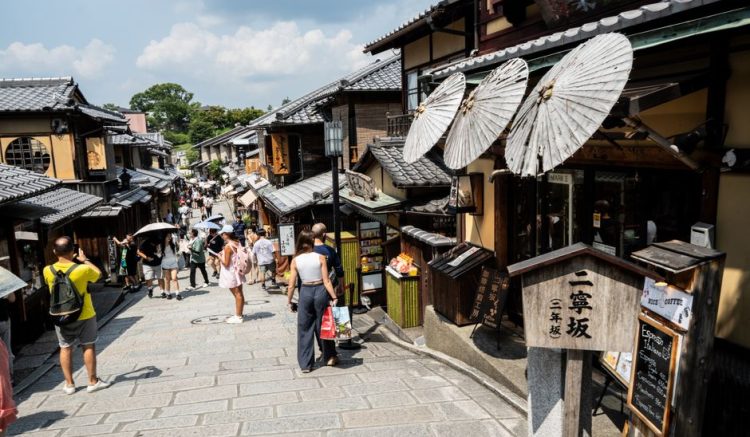
What do you actually do in Kyoto after you’ve seen Fushimi Inari and Kinkaku-ji and found both of them shoulder-to-shoulder with other travelers? This is the question most first-time visitors ask after their second day. The answer is not to add more famous temples. The answer is to change the way you move through the city.
This 5-day itinerary assumes you’ve either already seen the major sights or you’re simply not interested in fighting for a photo. It prioritizes neighborhoods over checklists, walking over bus transfers, and the quiet edges of Kyoto where the city still feels like itself. No product links, no tour bookings. Just a plan.
Day 1: Ohara and the Rural Temple Basin
Start in Ohara, a farming village about 45 minutes north of Kyoto Station by bus (Kyoto Bus 17 from Kokusaikaikan Station, ¥580). Most visitors never make it here. The ones who do tend to arrive late morning, so take the 8:05 bus and you’ll have the valley mostly to yourself.
Sanzen-in Temple
Sanzen-in (¥700) is the main draw. The approach road climbs past pickle shops and moss-covered stone walls. Inside, the Shuheki-en garden slopes down from the temple veranda. You sit on tatami, look out at cedar trees and moss, and hear almost nothing. Go early. The garden opens at 8:30.
Jikko-in and Hosen-in
Two smaller temples sit within a 5-minute walk. Jikko-in (¥700) has a small garden and a room where you can get matcha. Hosen-in (¥800) is even quieter, with a 700-year-old pine tree shaped like Mount Fuji. Both are worth the entry fee if you’re already in Ohara. If you only have time for one, pick Hosen-in.
Lunch: eat at one of the farmhouse restaurants along the main road. Soba with mountain vegetables costs around ¥1,200. Sit on the floor. Drink roasted tea. The pace here is the point.
Day 2: Kurama to Kibune — A Mountain Walk in Reverse
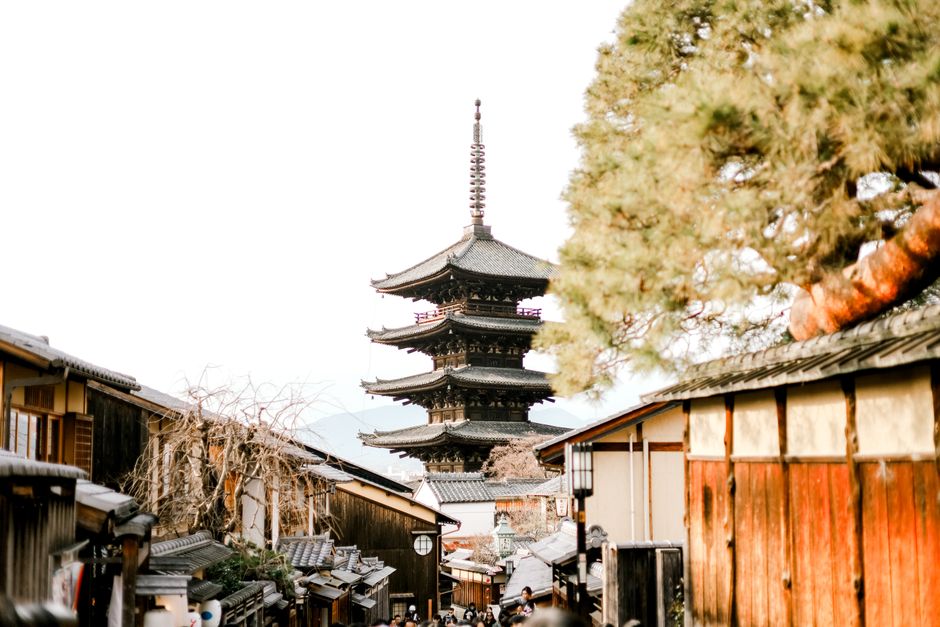
Most guides tell you to start at Kurama-dera and walk down to Kibune. Do the reverse. Start at Kibuneguchi Station on the Eizan Line (¥420 from Demachiyanagi), walk up the road to Kifune Shrine, then hike over the mountain to Kurama. You’ll avoid the tour groups that start at Kurama in the morning.
The hike takes about 2 hours at a relaxed pace. The trail is well-marked, with stone steps, tree roots, and a few steep sections. Wear real shoes. Bring water. There’s a small shrine halfway up with a water basin and a bench.
Kifune Shrine
Kifune Shrine is dedicated to the god of water. The approach is lined with red lanterns. If you arrive before 10:00, you’ll have the inner sanctuary nearly to yourself. The water fortune (¥300) is a paper slip that reveals its message when you dip it in the sacred stream. It’s a good moment, even if you’re not spiritual.
Kurama-dera
After the ridge, you descend into Kurama-dera (¥500). The main hall sits on a mountainside with a wide view over the valley. The temple burned in 2026 and has been partially rebuilt, so some structures are new. The energy of the place remains. Walk down the long staircase into Kurama village and catch the train back to the city.
This day works in any season, but it’s best in autumn when the maple leaves turn. November crowds are real, even here. Go on a weekday.
Day 3: Tofuku-ji and the Fushimi Backstreets
Tofuku-ji is famous for its autumn foliage and its Tsutenkyo Bridge. It is also, outside of late November, surprisingly manageable. The temple complex (¥500 for the gardens, ¥1,000 for the bridge during autumn) is vast enough that you can find empty corners even on a busy day.
The Hojo gardens, designed by Mirei Shigemori, are the reason to come. Four gardens surround the abbot’s hall, each with a different composition: moss, stone, gravel, and maple. They are meant to be viewed from the wooden walkway, not walked through. Sit and stay for 20 minutes. Watch how the light moves.
The Fushimi Sake District
After Tofuku-ji, walk 15 minutes south to the Fushimi sake district. This is not the Fushimi Inari area — it’s the flat, canal-lined neighborhood where sake has been brewed for centuries. The Gekkeikan Okura Sake Museum (¥600) gives a solid 30-minute overview of the brewing process. The tasting at the end includes three sakes.
Walk along the Horikawa canal. The old wooden breweries with their white walls and black lattice windows are still operating. Fujioka Shuzo and Yamamoto Honke are two smaller breweries that offer tastings. Fujioka’s junmai ginjo is clean and dry. Yamamoto’s nigori is cloudy and sweet. Buy a bottle if you have room in your bag.
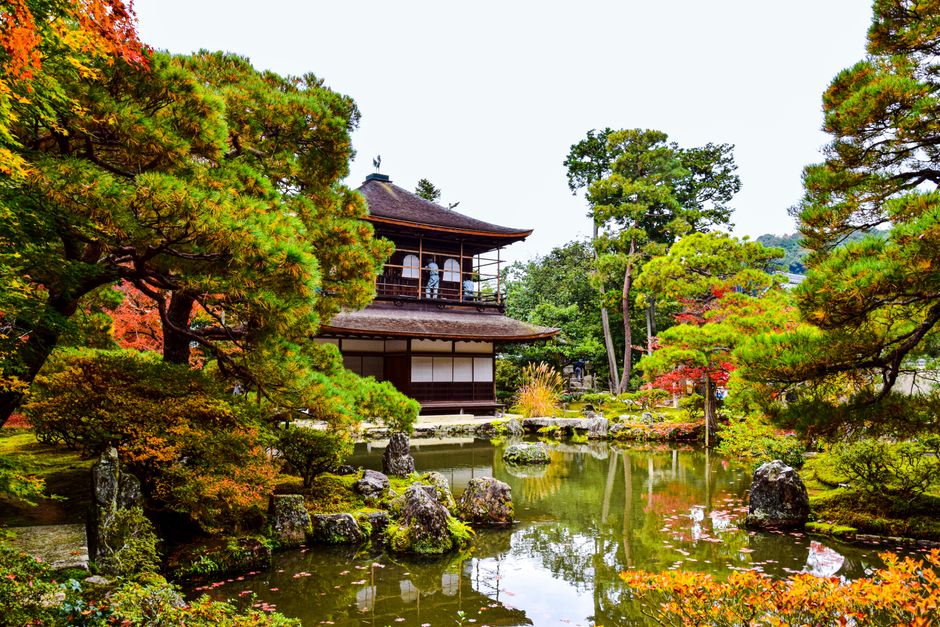
Day 4: A Comparison of Kyoto’s Quiet Garden Clusters
| Area | Best For | Crowd Level | Entry Cost | Time Needed |
|---|---|---|---|---|
| Shugakuin Imperial Villa | Designed landscape, borrowed scenery | Very low (reservation required) | Free | 90 minutes |
| Manshu-in Temple | Dry garden, quiet verandas | Low | ¥600 | 60 minutes |
| Enko-ji Temple | Autumn foliage, bamboo grove | Low to moderate | ¥500 | 45 minutes |
| Shisen-do | Literary hermitage, azalea garden | Very low | ¥500 | 45 minutes |
All four of these sit in the northeast of the city, far from the main tourist corridor. You can visit three in one day if you start early and use taxis between them (each ride is ¥1,200–1,800).
Shugakuin Imperial Villa is the standout. It requires a free reservation through the Imperial Household Agency website, which you can book up to 3 months in advance. The upper garden, with its view over the city and the surrounding hills, is one of the best designed landscapes in Japan. The tour is in Japanese, but an English audio guide is provided.
Manshu-in is a 10-minute walk from Shugakuin. Its dry garden is small but precise, and the wooden corridors feel lived-in rather than museum-like. Enko-ji has a small bamboo grove behind the main hall and a garden that turns deep red in November. Shisen-do was built by a samurai-turned-poet in the 17th century. The azalea garden blooms in May, but the quiet interior is worth a visit any time.
Verdict: If you only do one, do Shugakuin. If you want a full day, do Shugakuin at 10:00, Manshu-in at 12:00, lunch at a local soba shop, then Shisen-do at 14:30.
Day 5: Uji — Tea, Temples, and the River
Uji is 20 minutes south of Kyoto Station on the JR Nara Line (¥240). It is the birthplace of Japanese tea culture, and it feels like a small town rather than a city district. The Byodo-in Temple (¥600) is the famous sight, with its Phoenix Hall on the ¥10 coin. It’s worth seeing once, but the real Uji is across the river.
The Tea Houses
Nakamura Tokichi and Itoh Kyuemon are the two big names. Nakamura Tokichi’s main shop has a tea house with lines that can stretch 40 minutes on weekends. Go to the branch inside the station instead. The matcha soba set (¥1,500) and the matcha parfait (¥1,200) are both worth the price. Itoh Kyuemon’s shop is quieter and sells excellent hojicha. Buy a bag of loose-leaf hojicha for ¥1,000.
Ujigami Shrine and the River Walk
Ujigami Shrine is a 10-minute walk from Byodo-in and is the oldest Shinto shrine in Japan, built around 1060. It is small, shaded, and usually empty. From there, walk down to the Uji River. The stone bridge and the cormorant fishing boats (operating in summer) give the area a slower rhythm. Sit on the riverbank with a can of cold tea from the vending machine. That’s the afternoon.
If you have energy left, walk to Mimuroto-ji Temple (¥500), known for its hydrangea garden in June and its autumn leaves. It’s a 25-minute walk from the river, mostly uphill. The garden is circular and easy to navigate.
What Most People Get Wrong About Kyoto’s Hidden Gems
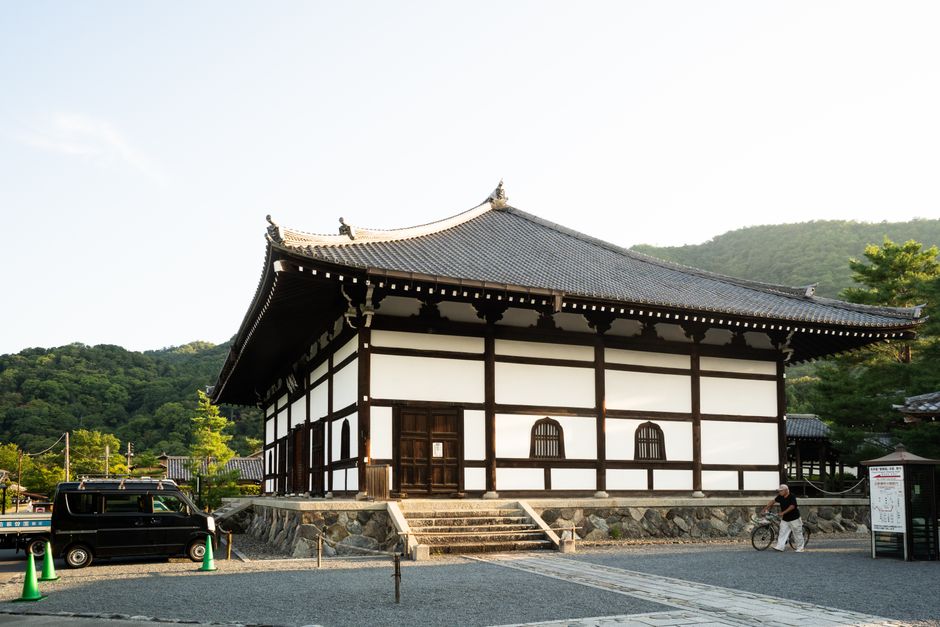
Here is the mistake: travelers treat “hidden gems” as a list of secret spots to check off, then rush between them the same way they rushed between the famous ones. That defeats the purpose. The value of these places is not that they are secret. The value is that they are slow.
So plan fewer stops. Spend longer at each one. Sit on the veranda at Sanzen-in for 30 minutes instead of 10. Walk the Kurama trail without checking your phone. Let the garden at Tofuku-ji do what it was designed to do, which is to slow your breathing down.
The other mistake is going in autumn and expecting solitude. Kyoto in November is crowded everywhere. If you want empty temples, go in February or March. If you want autumn leaves, accept the crowds and go early in the morning.
My recommendation: pick two days from this itinerary and build the rest of your trip around them. Don’t try to do all five. The best version of Kyoto is not the one you photograph. It’s the one you remember sitting still.