
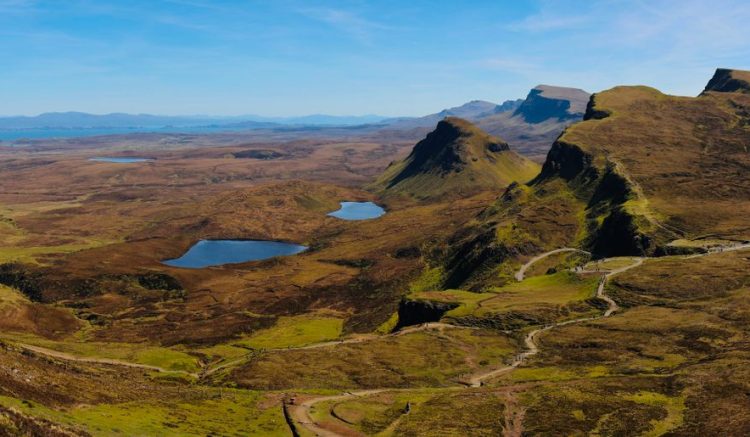
You have five days, a hire car, and a weather forecast that changes every three hours. That is a normal July trip to the Scottish Highlands. The smart approach is to build your Isle of Skye route around driving time, daylight, and backup walks instead of trying to tick off every famous viewpoint.
1. Is July the best month for Skye? Yes, if you plan around light
What July actually gives you
July gives Skye its biggest practical advantage: time. Around the middle of the month, Portree has sunrise at roughly 4:50 a.m. and sunset near 10:10 p.m. Local daylight stretches beyond 17 hours, with useful twilight before sunrise and after sunset. You do not need to rush from the Old Man of Storr to the Fairy Pools in the same afternoon. Pick one major area, return for dinner, then use the evening for a short beach walk, harbour stroll, or second viewpoint.
The weather bargain
Do not confuse long daylight with warm, dry weather. Long-term Met Office figures for the Skye area put July daytime highs near 17°C and night-time lows around 11°C, with more than 100mm of average rainfall. The Met Office Skye climate averages explain the trade-off clearly: July is the best month for flexible outdoor time, not guaranteed sunshine. My verdict is simple: choose July for a first Skye visit if you can handle wind, rain, and a spare plan for every major walk.
2. Choose the route before you choose the hotel
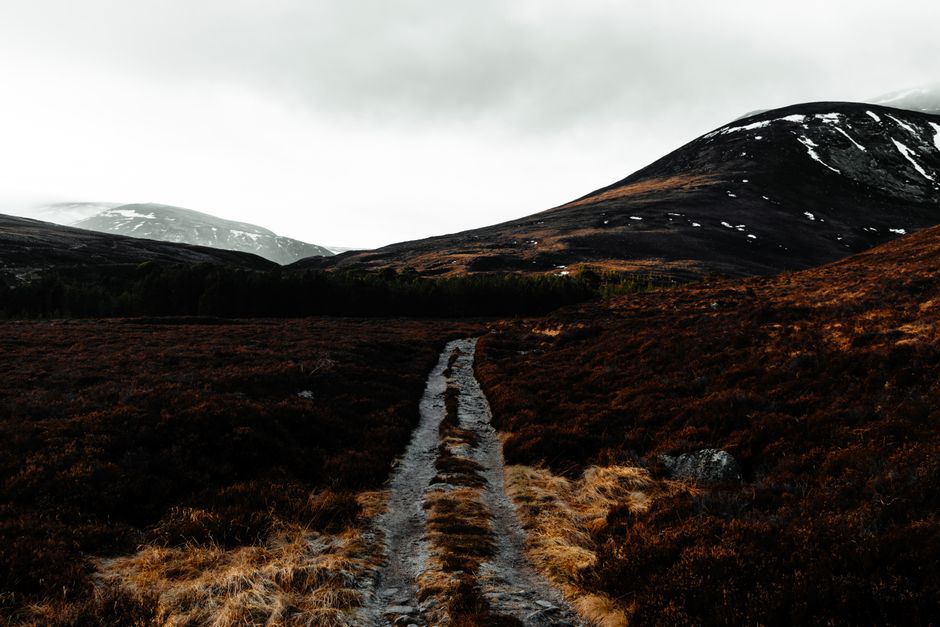
The most reliable five-day plan uses Portree as a central base for the north and east, then places one night in the south or west. That cuts backtracking and leaves the long evening available for scenery rather than motorway-style driving.
| Day | Base | Main plan | Useful timing |
|---|---|---|---|
| 1 | Portree | Fort William, Glenfinnan, Eilean Donan, then Portree | Allow 6–8 hours with stops |
| 2 | Portree | Old Man of Storr, Lealt Falls, Kilt Rock, Quiraing | Start before 8 a.m. |
| 3 | Portree or Broadford | Fairy Pools, Talisker Bay, or Elgol | Keep the evening open |
| 4 | Portree or Dunvegan | Dunvegan, Coral Beach, Neist Point | Plan 4–5 hours of driving and stops |
| 5 | Mallaig or Fort William | Armadale ferry or Skye Bridge, then mainland return | Reserve the crossing first |
The ferry choice
Use the Mallaig–Armadale ferry when it makes your route feel like a loop. The crossing takes about 45 minutes. For summer 2026, CalMac lists an adult single fare at £4 and a car single fare at £13.25, with the driver charged separately from the vehicle. CalMac’s official Mallaig–Armadale route page says vehicle bookings are recommended and check-in is 20 minutes before departure. The clear choice: book the ferry for a scenic transition, but keep the Skye Bridge as your backup if a sailing is cancelled or your schedule slips.
3. Turn long summer evenings into a second hiking window
Long summer evenings are a planning tool, not just a pretty feature. Use the bright hours to separate popular attractions from quieter walks. The classic mistake is to spend the whole day driving the Trotternish loop, arrive at the Quiraing exhausted, and then miss the best light because you are still looking for dinner. Reverse the pattern. Do the busiest viewpoint early, return to your accommodation during the afternoon, and save the final two hours for a short route near where you are staying.
Use a light-first schedule
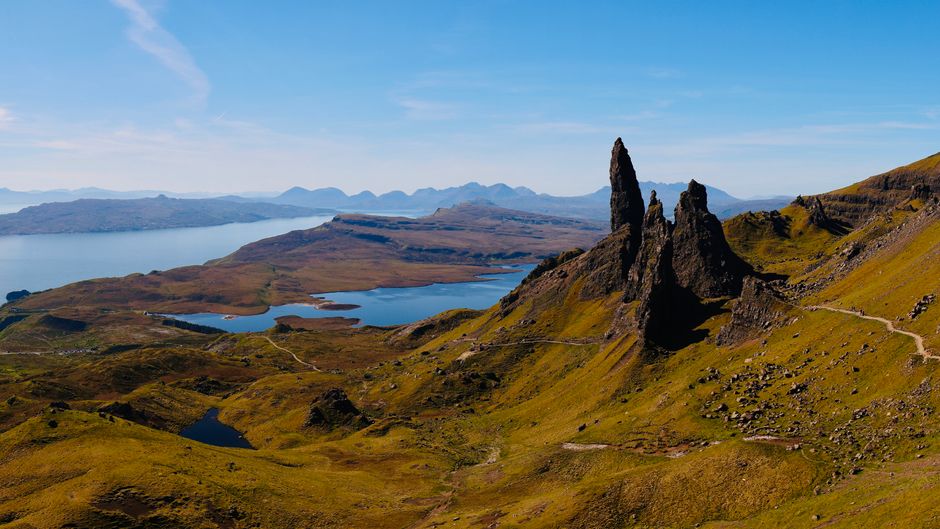
On a clear day, start the Old Man of Storr before breakfast. The path is steep but short enough for a morning visit, and early light makes the rock pinnacles stand out. Continue north to Lealt Falls and Kilt Rock, then stop for food before the Quiraing. If cloud covers the ridge, you have not lost the day; the waterfalls and coast still work in poor visibility. Around 7 p.m., check the sky again. If the cloud base lifts, drive to a nearby viewpoint instead of forcing another long hike.
Protect the last two hours
Use the final light for places that reward atmosphere more than distance: Portree harbour, Coral Beach, Camusdarach Beach near Mallaig, or the road around Loch Slapin. Take a head torch even though you expect daylight. Fog can make a path look dark before sunset, and wet rock becomes harder to read. Midges also become more noticeable in calm, damp conditions, so carry repellent and choose a breezy shoreline when possible. Portree’s July sunrise and sunset table is useful when you need to set a realistic return time.
4. Pack and drive for Skye’s real failure points
Skye trips usually go wrong through small gaps in preparation: a full car park, a wet phone, a missed ferry, or a walk that takes twice as long in wind. Pack for those failures before you leave the mainland.
- Download maps before the island. Save the route in Google Maps and keep an offline map in OS Maps. Mobile signal is patchy around the Cuillins and the north coast.
- Carry waterproof layers. A rain shell, trousers, fleece, hat, and spare socks matter more than a second pair of casual shoes. July rain can arrive sideways.
- Leave the tank above half full. Fuel stations are limited outside Portree, Broadford, and Uig. A detour for weather can add an hour.
- Reserve the high-risk parts first. Book accommodation, ferry space, and any timed attraction before planning restaurant stops.
- Park only in marked spaces. Do not block passing places or farm entrances. A scenic photo is not worth delaying a bus, tractor, or emergency vehicle.
- Use the Met Office forecast by location. Compare Portree, the Quiraing, and the Cuillins separately. One sunny forecast for Skye does not mean every ridge is clear.
My packing verdict: waterproof clothing, offline navigation, and flexible food plans will improve the trip more than expensive camera equipment. Skye rewards readiness because the best view may appear during a 20-minute break in the rain.
5. Should you drive or use public transport? Drive for Skye’s west coast
Drive if Neist Point, Coral Beach, the Fairy Pools, and Elgol are priorities. These places sit far enough apart that public transport turns a five-day plan into a timetable exercise, and several scenic stops have no useful bus connection.
Public transport still works for a shorter, slower trip. Citylink and local Stagecoach services can connect Inverness, Fort William, Portree, Broadford, and Uig, while buses are a sensible choice if you want to stay in one town and focus on walks from that base. You will trade reach for less driving stress, but that is a fair trade for travellers who dislike narrow roads.
For most first-time visitors, a small hire car wins because it lets you move sightseeing into the clearest weather window. Choose a compact vehicle, learn how to use passing places, and do not treat a single-lane road like a race track. The right alternative to driving is not a rushed coach tour; it is a slower itinerary built around two bases and fewer attractions.
6. Questions to settle before you book
Can I see Skye in one day?
You can see one slice of Skye in one day, but you cannot properly cover the Trotternish peninsula, the Cuillins, the west coast, and the southern ferry route. If one day is all you have, choose the Trotternish loop from Portree and start early. The Old Man of Storr, Lealt Falls, and the Quiraing form a logical route, while Neist Point and the Fairy Pools should wait for another visit.
Do I need to include the Isle of Skye ferry?
No. The Skye Bridge is usually the simpler choice from the east and south. Include the Mallaig–Armadale ferry when you are already travelling through Fort William, Glenfinnan, or the Road to the Isles. It adds atmosphere and breaks up the drive, but it should not control your whole holiday. A reserved crossing is useful; a missed crossing is not a disaster if you have planned the bridge route.
What should I do when the weather closes in?
Drop exposed summits and switch to lower-level scenery. Visit Dunvegan Castle, walk around Portree, explore the Skye Museum of Island Life, or drive a short coastal section with several safe stopping points. Keep one flexible afternoon in the itinerary rather than booking every hour. The best July plan is not the one with the most attractions; it is the one that still works when the mountains disappear behind cloud. The Highlands will keep rewarding travellers who treat weather and daylight as part of the landscape rather than obstacles to the trip.